Naui Uses the Term Decompression Illness Dci to Describe
Naui Uses the Term Dci to Describe Get link. Decompression illness or DCI is associated with a reduction in the ambient pressure surrounding the body.
1
When this happens the quicker treatment begins.
. The dives were to a depth of. Neurologists may be consulted to diagnose and treat the severe neurologic injuries that can occur in divers with decompression illness DCI. The most important reasons for the depth limit are physiological.
Currently referred to as Decompression Illness DCI the Bends may be the most well-known hazard of diving. The two mechanisms are. And arterial gas embolism AGE which is caused by air entering the arterial blood because of a burst lung.
Although the term DCI is sometimes used interchangeably with DCS you should be aware that there is a difference. Remember that the term decompression illness DCI includes both decompression sickness DCS resulting from dissolved nitrogen or another inert gas being eliminated from a divers body tissues. Prior to the late 1980s the diagnosis decompression sickness DCS was invoked for symptoms presumed to arise as a consequence of bubble formation from dissolved inert gas during or after decompression.
It is the volume of gas that can be breathed in. Start studying NAUI Rescue Diver. The known risk factors for divers are deep or long dives cold water heavy exercise at depth and rapid ascents.
This occurs in about 2 of all DCI cases and can end in death. DCI encompasses two diseases. Arterial Gas Embolism AGE AGE is a condition caused by gas in the arterial circulatory system originating from lungs.
NAUI has chosen to use the _____ dive tables as the basis for its standard EAN32 and. The main risk factor for DCI is a reduction in ambient pressure but other risk factors will increase the likelihood of DCI occurring. Decompression illness affects scuba divers aviators astronauts and compressed-air workers.
DCI a diffuse and multifocal process results when bubbles cause symptoms by exerting mass effect in tissues or obstructing venous or arterial flow. The basic measure of breathing capacity is known as Maximal Voluntary Ventilation MVV. As DCS and AGE quite often occur together these are commonly summarised as DCI or DI which is used as the preferred term for decompression-related accidents.
A disorder caused by the formation of nitrogen bubbles in the blood and tissues following a sudden drop in the surrounding pressure and characterized by joint pain skin irritation cramps numbness and in severe cases paralysis. Also called divers disease the bends aerobullosis and caisson disease is a medical condition caused by dissolved gases emerging from solution as bubbles inside the body tissues during decompression. Which term describes an ideal characteristic of each diver in a buddy team.
If the bubbles cause medical problems for the diver then the diver is said to be suffering from decompression illness DCI. DCI can be caused by two different mechanisms which result in overlapping sets of symptoms. Remember that the term decompression illness DCI includes both decompression sickness DCS resulting from dissolved nitrogen or another inert gas being eliminated from a divers body tissues.
In 1878 Paul Bert established that _____ liberated as bubbles following sudden decompression was the cause of decompression sickness. DCI encompasses both decompression sickness DCS and arterial gas embolism AGE. Decompression Sickness DCS and Arterial Gas Embolism AGE DCS.
One of the first operational uses of a chamber was during a tunnel construction project under the Hudson River between New York and New Jersey in 1879. DCI encompasses two diseases decompression sickness DCS and arterial gas embolism AGE. First aid measures for a victim that has experienced serious decompression illness DCI include.
Decompression sickness DCS which results from metabolically inert gas dissolved in body tissue under pressure precipitating out of solution and forming bubbles during decompressionIt typically afflicts underwater divers on poorly. The term DCI is used because the signs and symptoms of DCS and AGE can be similar and because recompression is the treatment for both. What does the x stand for in the term EANx.
In other cases serious injury does occur. Decompression sickness abbreviated DCS. Inner Ear Decompression Sickness with residual deficits CARDIOVASCULAR SYSTEMS Relative Risk Conditions The diagnoses listed below potentially render the diver unable to meet the exertional performance requirements likely to be encountered in recreational diving.
Subclinical bubbles form during normal diving activity. Hyperbaric chambers began to significantly reduce the health risks of working underwater. Synonyms of decompression illness DCI are dysbaric illness DI decompression sickness DCS decompression accident or caisson disease.
DCS results from bubbles in body tissues causing local damage. Other Apps - April 11 2022 Decompression Illness Time Series Analysis Example Application 2 Scuba Scuba Self Contained Under Water Breathing Apparatus Scuba Diving Popular Form Of Recreational Ppt Download Diving Safty Decompression Meter. Proper administration of oxygen treating for.
Nitrox is a _____ breathing gas. Diminished breathing capacity increasing nitrogen narcosis and elevated risk of decompression sickness DCS. 15-33 m 50-110 ft.
In some cases the disease is mild and not an immediate threat. Diver B experienced a DCI in his left knee and right shoulder joints. These bubbles then cause local damage to body tissues or obstruct small blood vessels.
Time spent diving underwater causes an excess of inert gas such as nitrogen to dissolve in the body. Symptoms can start up to 12 hours after a dive and persist for 12-48 hours. Water temperature at the seabed was 5ÂC and 9ÂC at the surface.
There are few issues that generate as much confusion in diving medicine as the nomenclature of bubble-induced dysbaric disease. These bubbles are then transported to the lungs where in most cases they are filtered out - this is the process of decompression. Decompression Illness DCI Decompression illness DCI refers to both DCS and lung overexpansion injuries arterial gas embolism or AGE.
Pulmonary DCI the chokes is characterised by 1 inspiratory burning and substernal discomfort 2 non-productive coughing that can become paroxysmal like a coughing fit and 3 severe respiratory distress. Diver C experienced a DCI on his. Three incidents of decompression illness DCI A member has reported three instances of decompression illness on the same diving project.
And arterial gas embolism AGE which is caused by air entering the arterial blood because of a burst lung. When a diver surfaces this gas may form bubbles. These conditions may lead the diver to experience cardiac ischemia and its consequences.
40m in June in temperate waters. Learn vocabulary terms and more with flashcards games and other study tools. Decompression Sickness Decompression sickness DCS also called the bends or caisson disease is the result of inadequate decompression following exposure to increased pressure.
DCI was first reported in 1667 in a snake.
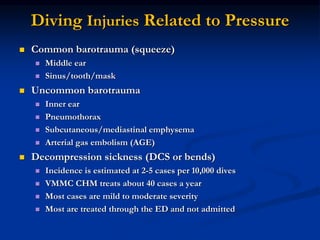
Decompression Illness
Decompression
Nitrogen Narcosis
1
No comments for "Naui Uses the Term Decompression Illness Dci to Describe"
Post a Comment